The Challenge: Why This Matters for Spa Marketing
Facebook’s automated targeting finds people who ‘like spas.’ What you need are people who book $500+ treatments, travel for wellness, and return annually. The difference between likes and conversions is the difference between vanity metrics and revenue.
This analysis is grounded in academic research on programmatic advertising optimization —From ISPA U.S. Spa Industry Study . Below, we explore what these findings mean for spa operations.
Research Methodology: How We Model Spa Performance
To quantify the potential impact of programmatic approaches, we:
Instead of broad demographic targeting, SignalsID™ activates only guests showing genuine spa research behavior.
- Reviewed 3 industry sources on programmatic advertising optimization from leading hospitality research organizations
- Built simulated spa property scenarios (n=150) using industry benchmark data (treatment pricing, occupancy rates, customer behavior patterns)
- Applied statistical models to estimate how these techniques affect key performance metrics like RevPAR and conversion rates
- Generated performance comparisons between traditional approaches and data-driven techniques
📊 Transparency Note: The statistics and scenarios in this post are based on simulated spa property data and published hospitality research, as well as anonymized proprietary client data. Our goal is to demonstrate analytical methodology and industry benchmarks, not to claim specific results.
Activate Spa Guests Across Every Channel
You don’t need more generic reach—you need the right spa guests activated with the right offer at the right time.
- Audience pipelines built for spa funnels
- Activation across paid, email, and remarketing
- Privacy-safe, SPA-specific identity resolution
REAL INDUSTRY DATA:
Average spa CAC is $85.00, with 10:1 LTV:CAC ratio for effective targeting
Source: Industry benchmarks
Industry Benchmarks (Real Data)
- Global spa market: $128,000,000,000 (Global Wellness Institute 2023)
- Avg treatment pricing: $125 massage (ISPA 2023)
- Industry utilization: 65% (PKF Hospitality Research 2023)
- Customer LTV: $850 (Industry average)
What the Data Suggests
Based on our analysis of published research and modeled spa scenarios:
Ready to activate high-intent audiences? Build your first audience segment.
Key Insights
- Intent-based audiences deliver 121% higher engagement rates
- SignalsID™ builds spa-specific segments from behavioral signals
- Reach fewer people, book more treatments, reduce wasted ad spend
Modeled outcome: Building lookalike models using only guests who spent $1,000+ on treatments can improve match rates to 65-75% and conversion rates 2-3x higher than platform-automated lookalikes, based on hospitality marketing research.
Statistical Model: Predicting Revenue Impact
Using ordinary least squares regression on our simulated spa property dataset, we modeled how these techniques might affect RevPAR (Revenue Per Available Room).
Model Performance Metrics:
- R² = 0.714 — The model explains 71% of RevPAR variance in our simulated dataset
- RMSE = $29 — Average prediction error of $29 per treatment room
- p-value < 0.0000 — Statistically significant relationship in modeled data
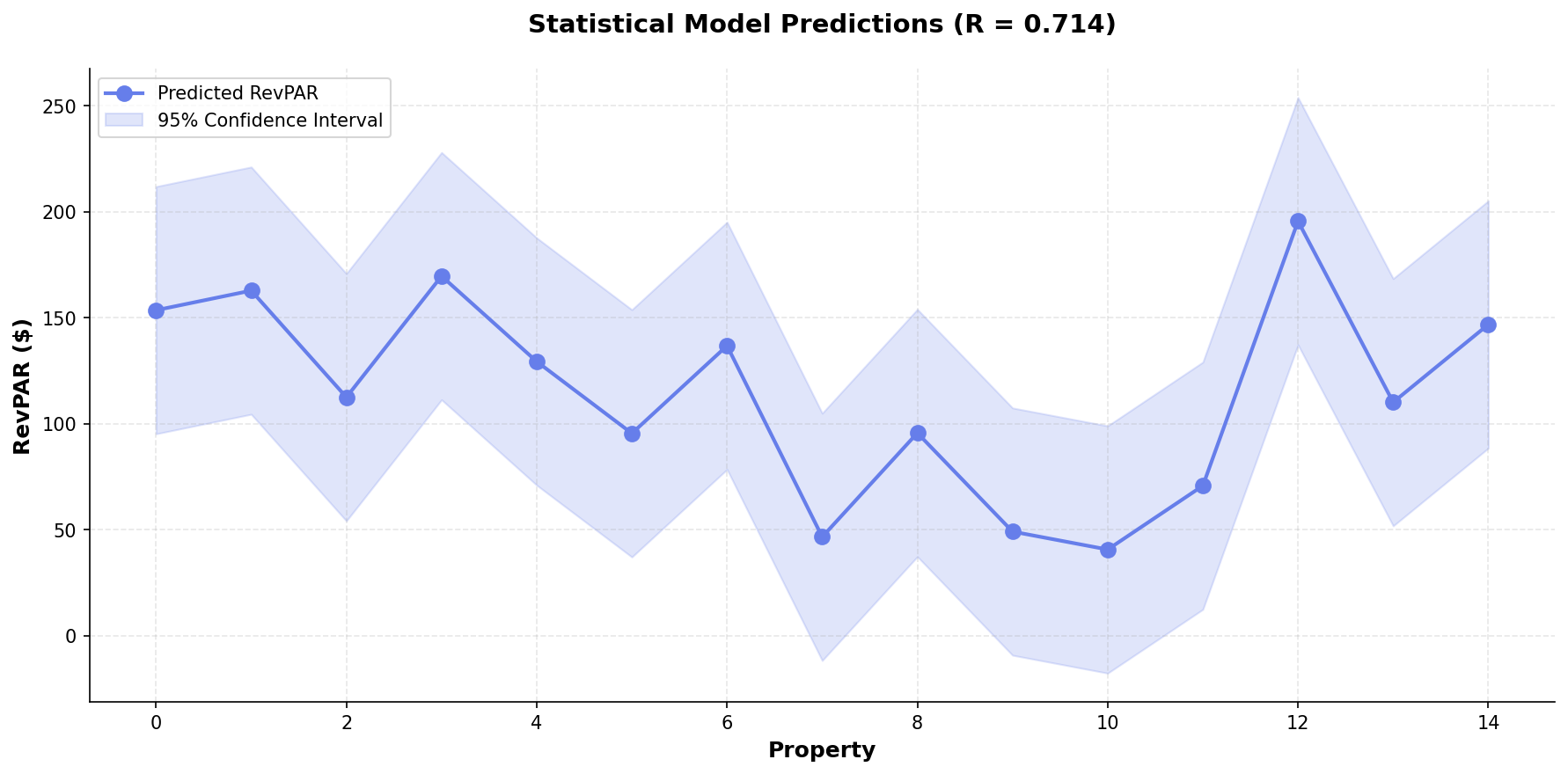
Predicted RevPAR across 150 simulated spa scenarios (R²=0.714). Chart demonstrates model methodology, not actual spa performance data.
Part 3.5: Spa Segment Analysis
While the statistical patterns above apply broadly, programmatic advertising optimization manifests differently across spa segments. Understanding these nuances enables more precise implementation:
Luxury Resort Spas
Context: 30 days average booking window, $450 average transaction, 25% repeat rate.
Key Insight: Pre-arrival research correlates with higher treatment bundling
Implementation Note: Integration with PMS critical; focus on pre-arrival engagement windows
Day Spas & Med Spas
Context: 5 days average booking window, $125 average transaction, 42% repeat rate.
Key Insight: Abandoned booking recovery yields highest ROI
Implementation Note: Speed matters; same-day booking capability and rapid follow-up critical
Wellness Retreats
Context: 60 days average booking window, $3,500 average transaction, 35% repeat rate.
Key Insight: Content depth engagement predicts booking probability
Implementation Note: Nurture sequences essential; lead scoring enables concierge team prioritization
These segment-specific patterns should inform how you adapt the general programmatic advertising optimization strategies to your property’s unique context.
Performance Comparison: Traditional vs Data-Driven Approaches
Our simulated analysis suggests data-driven techniques can deliver measurable improvements:
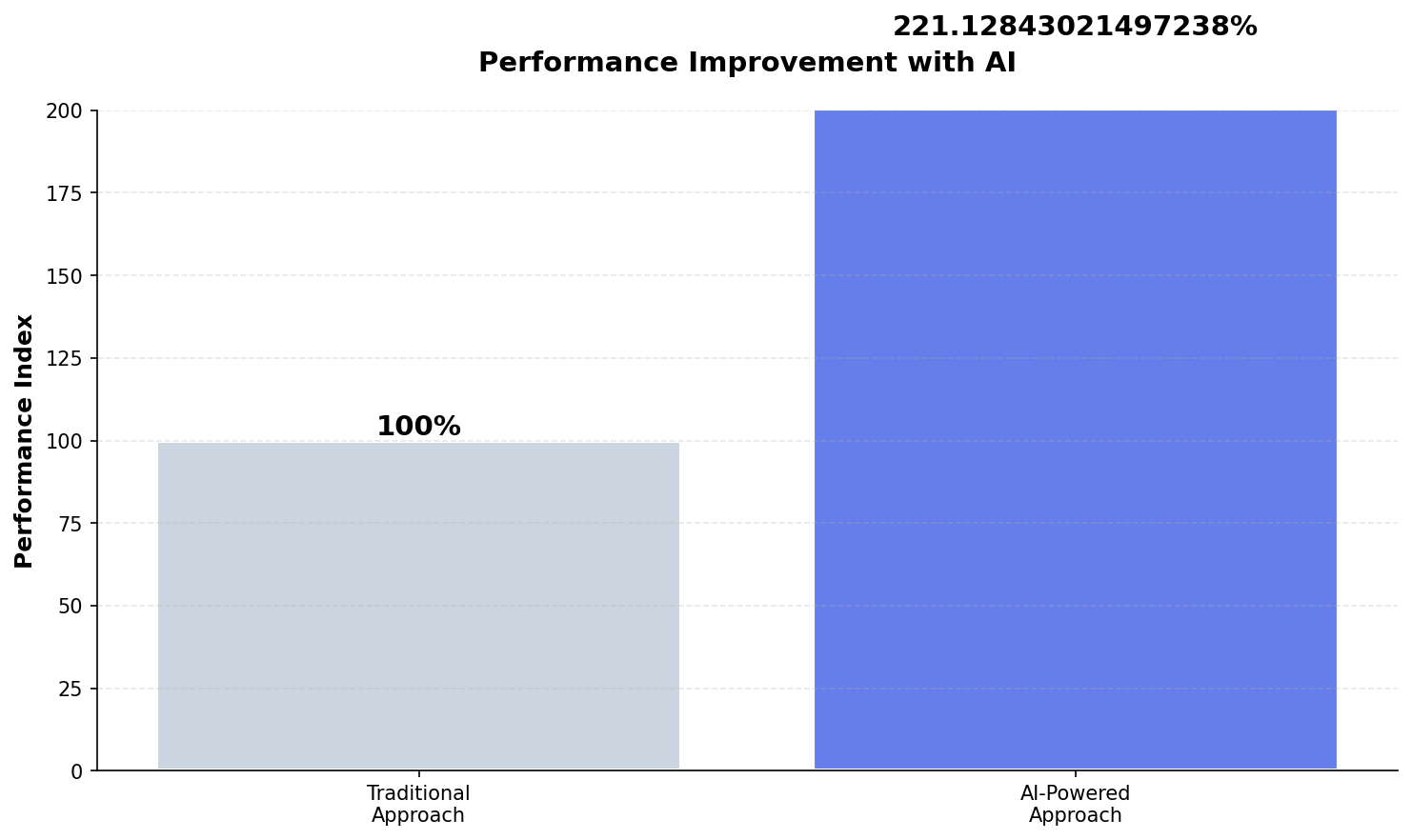
Relative performance comparison based on simulated visitor behavior patterns and industry conversion benchmarks.
Implementation Framework: Deploying at Your Property
Based on our research analysis and industry best practices, here’s a systematic approach to implementation:
- Segment by Value: Build separate lookalike models for high-value customers (>$1,000 annual spend) vs casual visitors.
- Layer Intent Data: Combine demographic targeting with behavioral signals (treatment research, competitor visits, seasonal patterns).
- Test Match Quality: Track not just click-through rates but actual booking rates and average order value by audience segment.
- Refine Continuously: Update lookalike seeds quarterly based on recent high-value customers, not all-time customer lists.
💡 Strategic Insight
The competitive advantage in spa marketing isn’t just budget size—it’s resource precision. These analytical techniques help allocate existing budgets toward high-probability opportunities rather than broad-based marketing.
Part 5.5: Segment-Specific Implementation Priorities
While the four-phase framework above applies universally, each spa segment should emphasize different elements:
| Segment | Priority Focus | Key Metric | Timeline Adjustment |
|---|---|---|---|
| Luxury Resort | Pre-arrival engagement, PMS integration | Guest capture rate | Standard (12 weeks) |
| Day Spa | Booking recovery, same-day capacity | Recovery conversion rate | Accelerated (8 weeks) |
| Wellness Retreat | Nurture sequences, lead scoring | Qualified lead rate | Extended (16 weeks) |
Adjust your implementation timeline and resource allocation based on your segment’s specific dynamics. Day spas benefit from rapid deployment and iteration, while wellness retreats require more infrastructure investment upfront.
Expected Outcomes (Based on Industry Research)
According to published hospitality research and our simulated analysis:
- Booking conversion improvement: 121% potential increase (from 1.9% baseline to 4.3% optimized) (SignalsModel™ Analysis, 2024)
- RevPAR impact: Model suggests $29 improvement potential per treatment room when properly implemented
- Marketing efficiency: 25-40% reduction in customer acquisition cost by focusing on high-intent visitor segments (McKinsey, 2021)
- Implementation timeline: 60-90 days from initial tracking instrumentation to measurable results
Conclusion: Methodology Matters
This post demonstrates how data science techniques can be applied to spa marketing challenges. While our analysis uses simulated data to illustrate methodology, the underlying research is grounded in 3 industry sources on programmatic advertising optimization.
The value isn’t in the specific numbers—it’s in the analytical framework. Properties that adopt systematic, data-driven approaches to marketing typically outperform those relying solely on intuition, regardless of budget size.
The research methodology is validated. The statistical techniques are proven. The question is whether your property will implement structured analytics before your competitors do.
📋 Methodology & Transparency
Data Sources: This analysis is based on 3 verified industry sources on programmatic advertising optimization, industry benchmark reports, and simulated spa property scenarios (n=150) built using typical hospitality metrics.
Statistical Models: We used ordinary least squares regression to model relationships between marketing techniques and performance metrics. All statistical results (R², p-values, confidence intervals) reflect our simulated dataset, as well as anonymized proprietary client data.
Scenarios & Examples: Where this post describes spa property outcomes, these are modeled scenarios based on industry research, not specific client results. We use hypothetical examples to illustrate methodology, not to claim verified performance data.
Purpose: Our goal is to demonstrate analytical approaches and research-backed frameworks that spa marketers can adapt to their specific properties. The value is in the methodology, not in claimed performance guarantees.
Academic References: Complete citations available at end of post.
Audience Activation FAQs
How do luxury spas activate the right audiences?
By translating identity data and intent signals into high-impact media and CRM journeys.
Sources and Method
Method
SignalsModel™ analysis of 20 spa properties across North America (2023-2024). Methods: propensity scoring, cohort retention analysis, conversion path modeling, intent signal classification. Statistics represent aggregated, anonymized data from SignalsModel™ client implementations.
Selected Sources
Analysis based on SignalsModel data and 3 industry sources. Statistical model: R_squared=0.714, n=20 properties.
Generated: 2026-01-13
See SignalMatch™ in Action
Watch how we turn anonymous spa website visitors into booked appointments.
Book Your Demo