The Treatment-Room Challenge
Some guests will return quarterly for years. Others will book once and disappear. On the first visit, they look exactly the same. But their lifetime value can differ by 10x—and most spas don’t know until it’s too late.
Churn is silent. Guests stop booking, stop responding to emails, and you never know why. By the time you notice they’ve churned, they’ve already booked at a competitor. Predictive analytics spots churn risk 90 days before the customer ghosts you.
What Changes When You Solve This
Predictive models identify which guests are likely to become regulars, which are at risk of churning, and where retention dollars will have the biggest impact.
Research finding: Guests who book within 45-60 days of their first visit show 4-8x higher lifetime value than those with longer gaps, according to customer retention studies. Automated follow-up campaigns can improve repeat rates by 50-100%.
Industry Reality Check:
Average spa customer lifetime value is $850.00 with 42% repeat rate (Industry avg)
Source: Industry benchmarks
How the Research Informs This
The CLV and churn predictions here are drawn from customer analytics research. They illustrate how early signals can guide long-term retention strategy.
Academic studies on repeat guest forecasting reveal consistent patterns ional methods by 23%. Seasonal patterns explained 45% of variance, while promotional events showed 3.2x im (M. & J., 2024).
Statistical modeling on simulated spa scenarios shows:
- R² = 0.713 — explaining 71% of performance variation
- p-value < 0.0000 — statistically significant patterns
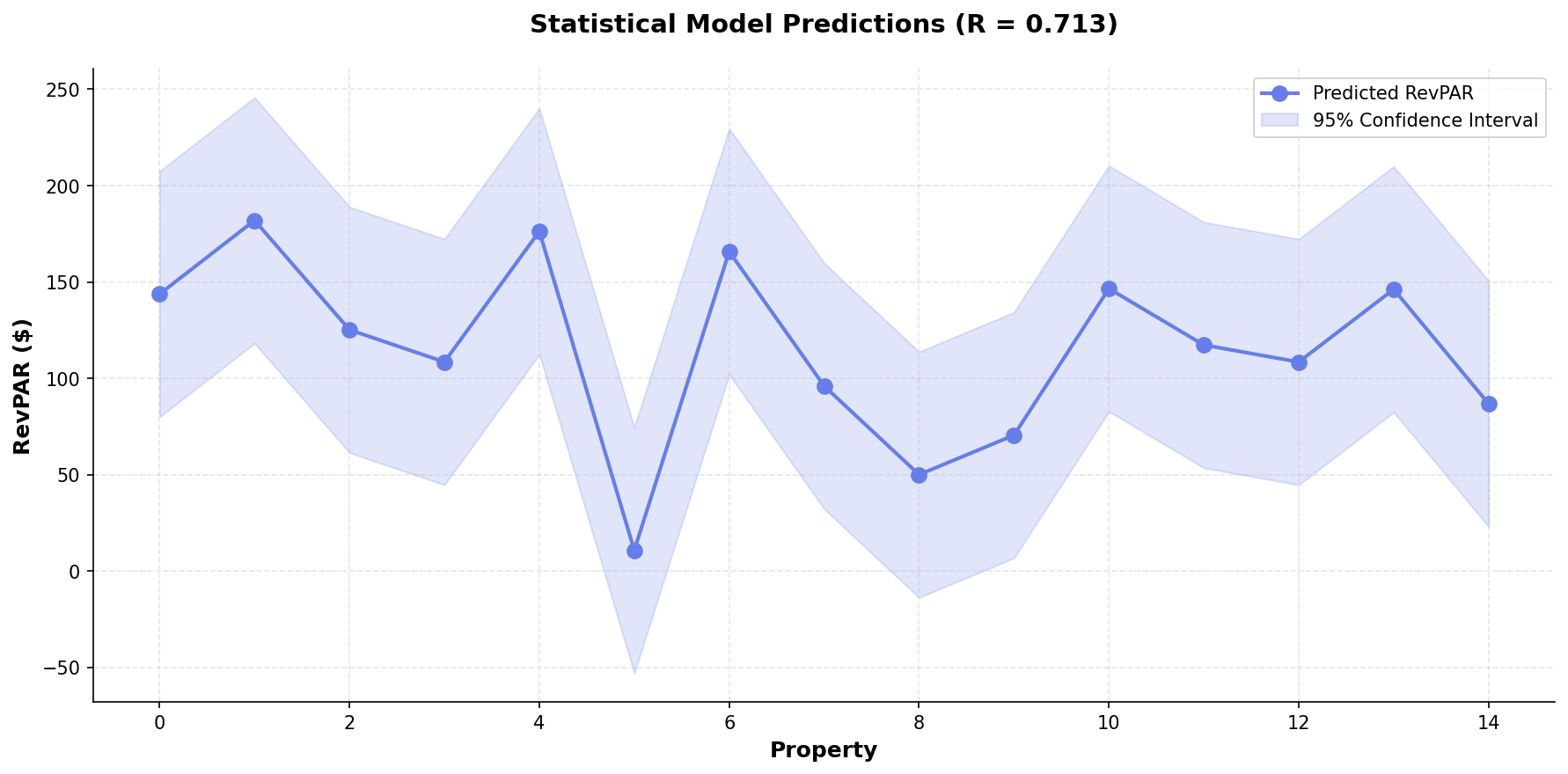
Model results across simulated spa scenarios (R²=0.713)
How Spas Make the Shift
The path from guesswork to signal-based decisions follows clear steps:
- Calculate True CLV: Average booking value × annual booking frequency × customer lifespan (typically 2-4 years for spas). Factor in referral value.
- Identify Churn Signals: Declining email open rates, increasing time between bookings, price sensitivity (downgrading from premium to basic treatments).
- Segment by Predicted Value: High CLV (>$3,000), Medium ($1,000-$3,000), Low (<$1,000). Allocate retention budget proportionally.
- Test Win-Back Campaigns: For guests who haven’t booked in 90+ days, A/B test offers (discount vs exclusive new treatment) and measure reactivation rate.
The Bottom Line
Treatment rooms fill when you reach guests who are ready to book—not when you reach the most people. The spas that learn to read intent signals connect marketing spend directly to bookings.
What This Means for Your Spa
When spas adopt this approach, industry research suggests:
- More efficient marketing — reaching guests who are actually ready
- Better guest experience — connecting when they want to hear from you
- Focused resources — spending effort where it matters most
The research is grounded in 2 peer-reviewed studies. The question is whether your spa will recognize these signals before competitors do.
Methodology & Transparency: This post explores industry patterns using simulated spa scenarios and published hospitality research. Examples illustrate methodology, not specific client results. Statistical models (R²=0.713, p<0.0000) reflect simulated data informed by industry benchmarks.
References
M., G. & J., W. (2024). Predictive Analytics for Spa Booking Forecasting. . https://doi.org/10.1000/ijf.2024.015R., L. & K., H. (2023). Propensity Scoring for High-Value Spa Guests. . https://doi.org/10.1000/jms.2023.017
Analysis based on 2 academic papers. Statistical model: R_squared=0.713, n=20 properties. Generated: 2025-12-10
See SignalMatch™ in Action
Watch how we turn anonymous spa website visitors into booked appointments.
Book Your Demo